
If you are trying to learn how to do a pull up and you cannot get even one clean rep yet, that is fine.
Pull-ups are really hard at the beginning.
You are literally trying to pull your entire bodyweight up using your back, arms, grip, and whatever control you have. If your body is not used to that, of course it is going to feel impossible.
I honestly do not remember learning my first pull-up.
When I was a kid, I was always climbing trees, hanging from branches, pulling myself around and doing dumb stuff outside like I was some kind of monkey. So by the time I actually started thinking about pull-ups as an exercise, pulling myself up was already something my body kind of knew how to do.
Later, when I got more into calisthenics and gym training, I started taking them more seriously. At my best, I could probably do around 12 to 16 strict pull-ups in a row if I really pushed myself.
But I was never that guy who wakes up thinking:
“Let’s go, pull-up day.”
I actually started preferring machines more as I trained longer.
Still, pull-ups are one of those exercises where getting your first real rep feels really good.
So if you are at zero right now, here is how I would build toward it.
What a Proper Pull-Up Actually Looks Like
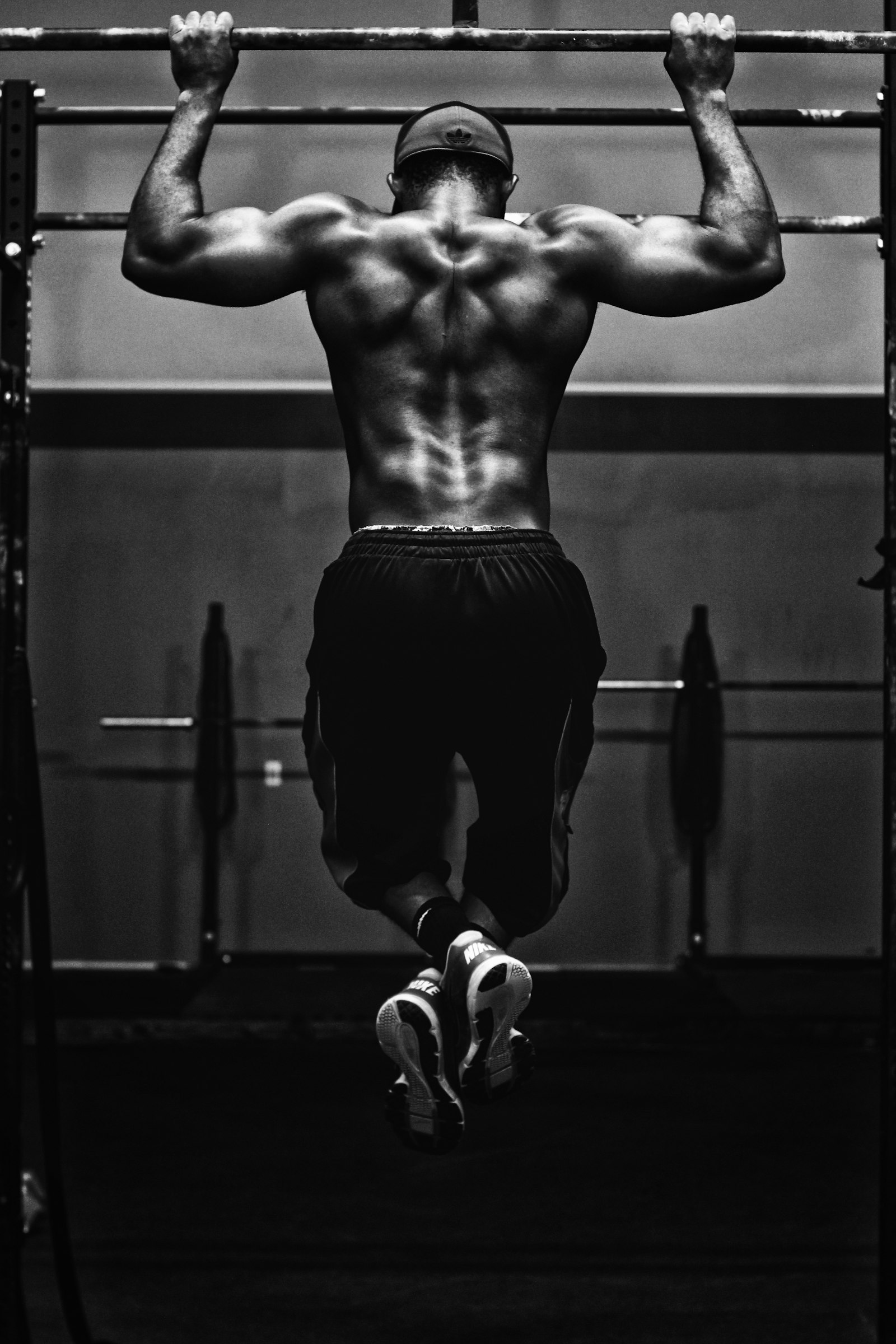
Before trying to do more pull-ups, you should probably know what counts as one.
Grab the bar with your palms facing away from you.
That is your normal pull-up grip.
I personally prefer going a little wider than shoulder width. I usually liked wide-grip pull-ups more, although I mixed grips sometimes.
Start from a dead hang.
That means your arms are straight and your body is hanging under the bar.
From there, pull yourself upward.
Do not turn it into some crazy swinging competition.
Bring your chest toward the bar and keep pulling until your chin gets over it.
Then lower yourself back down under control.
That last part matters.
A lot of people pull themselves up and then basically fall out of the sky.
You are missing part of the exercise if you just drop.
Control the way down.
That lowering part is actually one of the best tools you can use when learning your first rep, which I will get into in a second.
Pull-Ups vs Chin-Ups: What Is the Difference?
This is pretty simple.
A pull-up usually means your palms face away from you.
A chin-up means your palms face toward you.
Chin-ups tend to involve your biceps more, while pull-ups usually feel more back-dominant.
Do not overthink it.
Both are pulling exercises.
Both can make you stronger.
And if you are completely new, chin-ups might even feel easier for you because your arms can help more.
There is also a neutral grip, where your palms face each other.
Different grip, same basic idea: you are pulling yourself up.
You do not need to become some grip scientist before getting your first rep.
Just pick one and start training.
How to Get Your First Pull-Up
If I saw someone at the gym trying to do a pull-up and they could not get themselves over the bar, I never told them:
“Just keep trying harder.”
That is useless.
What I usually told them was:
Get a chair.
Put it under the bar.
Stand on it.
Grab the bar.
Use the chair or a tiny jump to get yourself into the top position, with your chin already above the bar.
Then slowly lower yourself down.
That is a negative pull-up.
And honestly, if you cannot do one rep yet, that is one of the first things I would make you do.
You are basically skipping the hardest part — pulling yourself upward — and training the lowering part instead.
Try to make the descent slow.
Do not just fall.
Control it for a few seconds.
Then get back up and repeat.
That teaches your body what the movement feels like and builds strength in the same pattern you eventually need for the full pull-up.
You can also use a resistance band.
Loop the band around the bar, put your foot or knee into it, and let the band help push you upward.
That way, you still perform the actual pull-up movement, but you are not pulling 100% of your bodyweight yet.
As you get stronger, use a lighter band.
Then eventually try without one.
A Simple Pull-Up Progression for Beginners
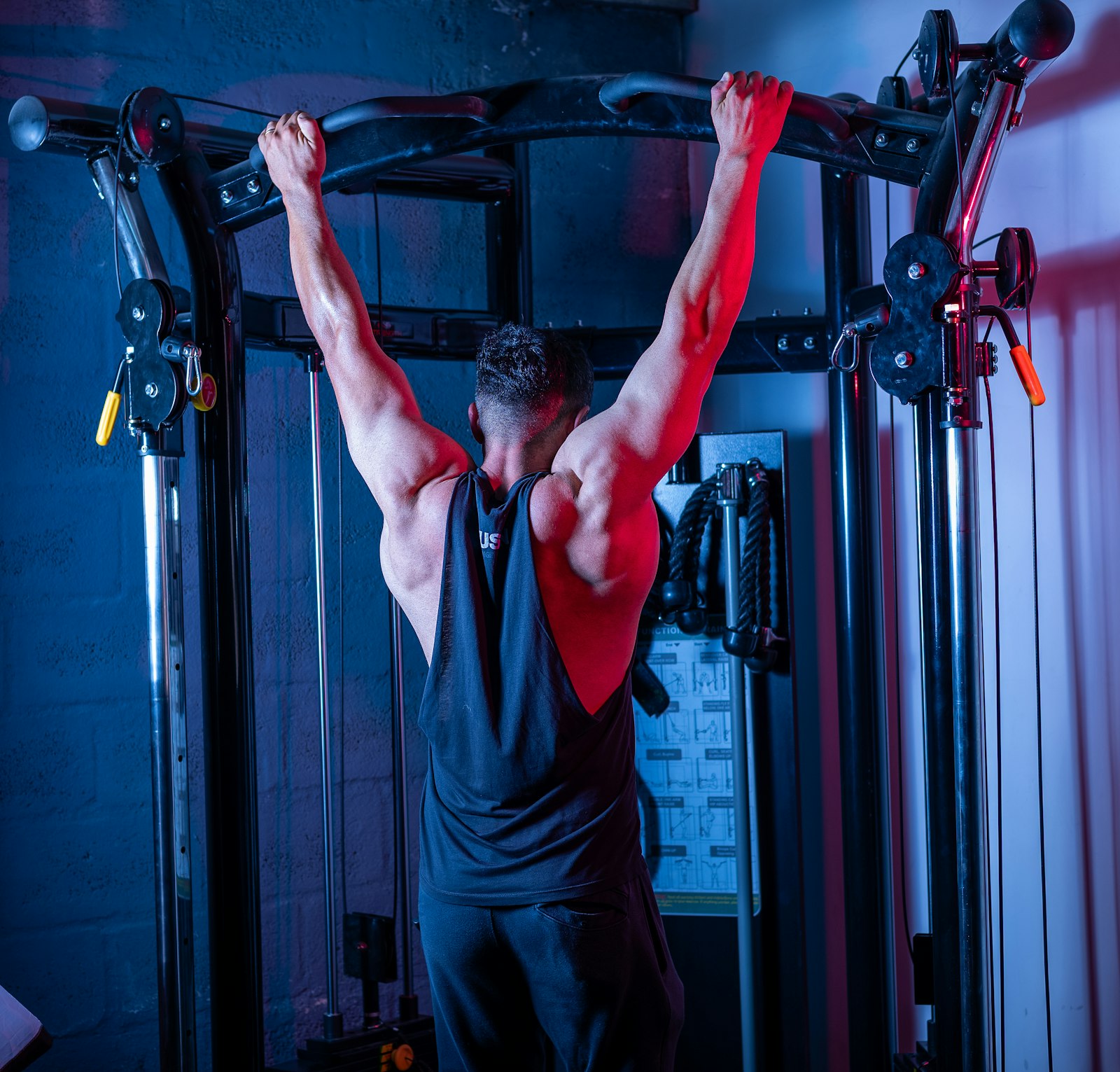
You do not need to follow this like some sacred law, but a basic progression could look like this:
Dead hangs
Just hang from the bar.
Sounds stupidly simple, but if your grip is weak, this is where you start.
Learn to hold your bodyweight comfortably.
Scapular pulls
Hang from the bar with straight arms, then pull your shoulders down and slightly lift your body without bending your elbows much.
This teaches you how to start the pull from your back instead of just yanking with your arms.
Inverted rows
If you have access to a lower bar, rings, or something similar, put your body underneath and row yourself upward.
You are pulling a smaller percentage of your bodyweight.
Negative pull-ups
Get to the top, lower yourself slowly.
Like I said, this is probably the one I would personally push the most for someone who is close to their first rep.
Band-assisted pull-ups
Use a resistance band to help you through the full movement.
Full pull-up
At some point, stop overthinking it and try one.
You might surprise yourself.
And you do not need to spend three months on dead hangs if you can already do negatives easily.
Start at whatever level actually challenges you.
What If You Do Not Have a Pull-Up Bar?
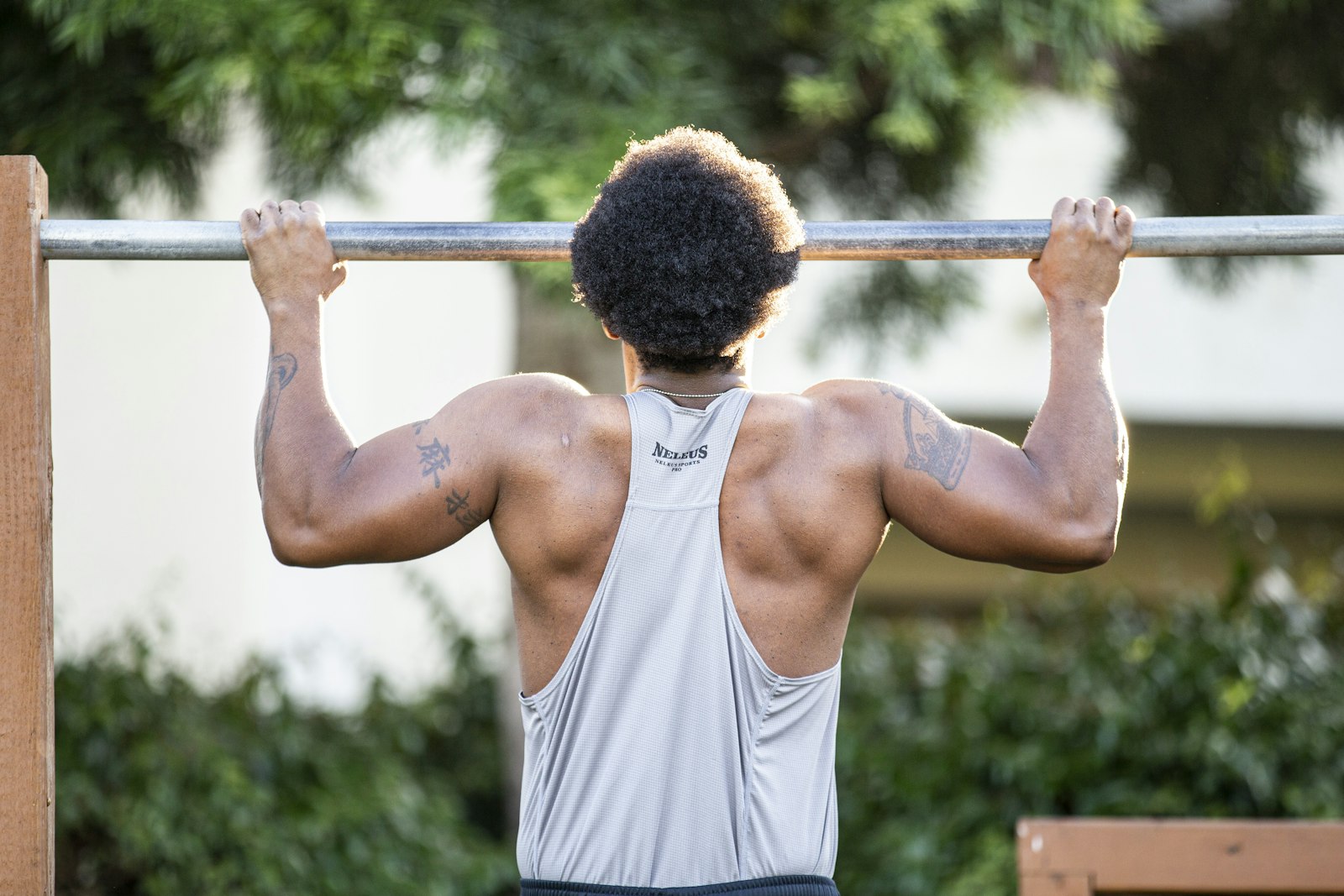
There are a few options.
A playground is honestly fine.
If you have access to a proper bar outside, use that.
A gym is obviously great too.
You can use an assisted pull-up machine, which takes some of your bodyweight away.
You can also use lat pulldowns.
Lat pulldowns help build the same general pulling muscles you need for pull-ups.
But personally, I do not think they feel the same.
Pulling a cable down while sitting in a machine and pulling your entire body through space are two different feelings.
They both help.
But if your actual goal is a pull-up, eventually you need to spend time hanging from a bar.
Now, door-frame bars?
I tried one.
I hated it.
Some setups are probably fine, but the one I used felt really cramped.
Your body is close to the door, your chest is fighting the frame, and everything feels awkward.
It was not comfortable for me at all.
So if you have the choice between a proper bar, playground, or gym setup, I would take those instead.
When Should You Move to the Next Level?
When whatever you are doing starts feeling controlled.
That is basically it.
If you can barely hold a dead hang for five seconds, you probably do not need to worry about advanced negatives yet.
If you can lower yourself slowly for several seconds during negatives, you are getting stronger.
If band-assisted pull-ups start feeling easy, use a lighter band.
If you are doing clean reps with the lightest band you have, try the real thing.
Do not wait until you feel “perfect.”
You probably never will.
At some point, just grab the bar and try.
Later, if you really like calisthenics, you can start doing harder stuff.
I eventually managed a few muscle-ups.
Maybe one, two, three proper ones at different times.
Then I kind of stopped caring about training them because I started thinking, what am I even doing?
I also played around with assisted one-arm pull-ups.
Not a real one-arm pull-up.
I would hold the bar with one hand, then use my other hand to grab my working forearm or wrist to help myself up.
It was just another progression to mess around with.
But if you are reading this trying to get rep number one, forget all that for now.
Get one clean pull-up first.
Common Pull-Up Mistakes
One of the biggest mistakes is swinging.
People start kicking their legs, throwing their hips, moving everywhere and somehow call that a strict pull-up.
If your goal is learning a proper pull-up, keep your body controlled.
Another one is doing half reps.
You pull halfway up, stop, go back down, then wonder why the top of the movement never gets stronger.
Train through as much range as you can control.
Another mistake is dropping from the top.
Like I said before, control the negative.
That part is useful.
Do not waste it.
And do not rush into weighted pull-ups because you got three ugly reps.
Get strong at normal ones first.
There is no prize for hanging 20 kilograms from your waist while your form looks like you are escaping a shark attack.
A Simple 4-Week Pull-Up Plan
This is not a promise that you will get your first pull-up in four weeks.
Some people might.
Some people might take longer.
That depends on your strength, bodyweight, training history, grip, consistency, all that stuff.
This is just a simple way to train toward it.
Week 1
Focus on getting comfortable hanging from the bar.
Do dead hangs, scapular pulls, and some inverted rows.
Keep the volume reasonable.
Do not destroy yourself.
Week 2
Add negative pull-ups.
Use a chair or small jump to reach the top and lower yourself slowly.
Try to control every rep.
Week 3
Keep the negatives and add band-assisted pull-ups.
Now you are practicing the entire movement with help.
You can still do rows or scapular pulls as extra work.
Week 4
Use less assistance if you can.
Do band-assisted reps, controlled negatives, and try a real pull-up at the beginning of your session while you are still fresh.
You do not need to try 50 times.
Give it a few good attempts.
If it does not happen yet, keep training.
You are not failing.
You are just not there yet.
Food and Recovery Still Matter
You can train pull-ups every day until your hands hate you, but your body still needs time and food to actually recover.
You do not need some insane bodybuilding diet.
Just make sure you are eating enough decent food and getting enough protein.
And sleep.
People love ignoring sleep and then wondering why they feel absolutely terrible in training.
Your body gets stronger when it recovers from the work you did.
Training is the signal.
Recovery is where the adaptation happens.
How Long Does It Take to Get Your First Pull-Up?
There is no honest answer.
Someone who is already athletic and light might get one in a week.
Someone heavier with almost no pulling strength might need much longer.
Do not compare your timeline to someone else’s.
If your negatives are getting slower, your hangs are getting longer, and you need less assistance, you are improving.
That matters.
Can Women Do Pull-Ups?
Of course.
Women can absolutely do pull-ups.
The progression is the same.
If you cannot do one yet, use hangs, rows, negatives, bands, or assisted machines and build toward it.
The bar does not care who you are.
How Many Pull-Ups Should a Beginner Do?
If you can only do one, do one.
That is not a joke.
Your first clean rep is already progress.
Once you can do a few, start building from there.
Do not obsess over whether a beginner is “supposed” to do five, ten, or some random number somebody online invented.
Focus on clean reps and getting stronger over time.
That is the whole game.
Get your first one.
Then get two.
Then three.
And eventually, the exercise that looked impossible starts feeling normal.